What to Wear on a Swamp Tour: Season-by-Season Packing for Louisiana Bayous
Clothing on a Louisiana swamp tour is not a fashion decision, it is a comfort decision. Humidity, mosquitoes, sun off the water and sudden rain all hit at once, and the wrong shoes or the wrong shirt can turn two hours on the bayou into a countdown.
Short answer
Wear quick-dry, light-colored, loose clothing with long sleeves and full-coverage shoes on any swamp tour around New Orleans. Covered pontoon boats shade you but still demand closed shoes and bug spray; kayak trips add a full change of clothes. From $35 covered cruises to $84 kayak paddles, every operator posts its own rules, and the packing list changes with them.
New Orleans drew 19.46 million visitors in 2025, and a large share of them ended up on a boat in the marsh at some point during the trip. What almost none of them plan for is the weather that comes with the water. A swamp in south Louisiana is a place where the air itself works against cotton shirts, sandals and anything you would wear to brunch.
This guide breaks the packing question into the decisions that actually matter: what each season throws at you, what the boat itself provides, what a kayak demands that a pontoon does not, and the single mistake that ruins each format. The short version is that quick-dry fabric, closed shoes and a good repellent solve most of it, but the details change with the season and with the boat.
What Should You Wear on a Swamp Tour in Each Season?
Louisiana swamp weather runs in four distinct packing modes: hot and humid from May through September, mild and mosquito-heavy in spring and fall, cool and damp in winter, and rain at any moment in any of them, so the right outfit depends far more on the month than on the tour. Summer is the season that punishes bad choices. Daytime humidity pushes heat indexes well past the comfort line, and the sun reflects off open water with almost no shade on uncovered boats. Loose, light-colored, moisture-wicking shirts beat tight cotton every time, and a wide-brim hat does more work than sunscreen alone.
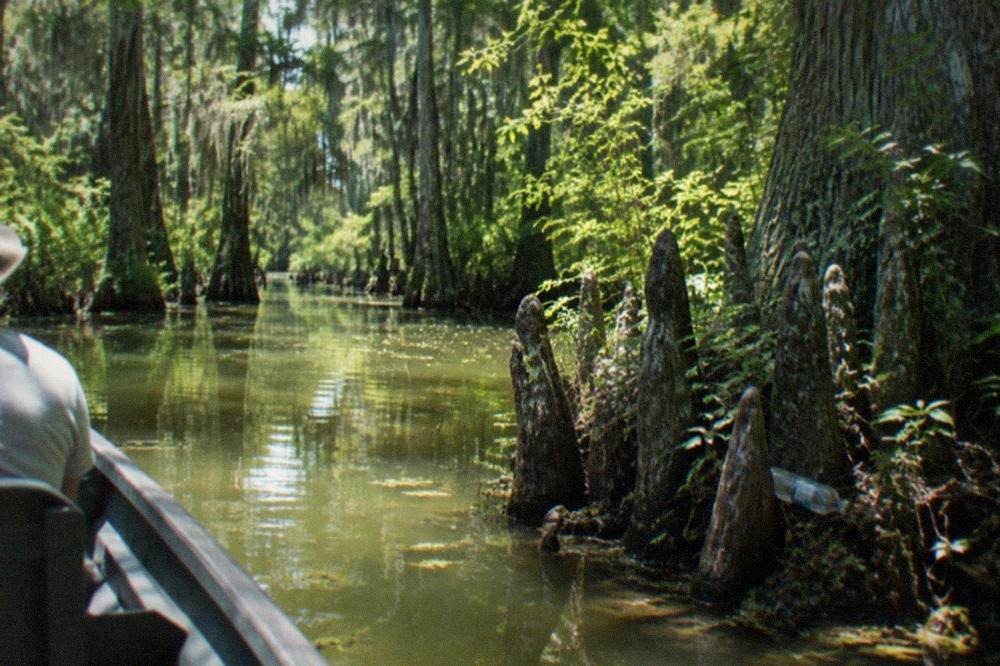
Spring and fall are the sweet spots for wildlife and for clothing, which is one reason the question of the best time of year for a swamp tour matters more than most first-time visitors expect. Temperatures sit in a comfortable band, but these are also peak mosquito months, so long sleeves and long pants stop being optional. Alligators are most active when the water is warm, and one kayak operator's own guidance notes that gators slow down below about 60 degrees Fahrenheit and get hard to find below 70, so shoulder-season layers serve two purposes at once.
Winter tours are colder and damper than people assume, because the wind on an open boat cuts through a light jacket fast. A warm midlayer, a windproof shell and a knit cap are the difference between a pleasant cruise and an hour of regret. Rain, finally, is a year-round possibility, and Cajun Encounters states plainly on its reservation policy page that tours go out rain or shine, with no refund if weather forces a return after an hour or more of the swamp tour has been completed. Pack for it.
| Season | Typical conditions | Clothing that works | What to skip |
|---|---|---|---|
| Summer (Jun–Sep) | Extreme humidity, strong reflected sun, afternoon storms | Loose light-colored quick-dry shirt, brimmed hat, sunglasses, high-SPF sunscreen | Dark cotton, denim, anything tight |
| Spring (Mar–May) | Mild, humid, heavy mosquito activity | Long sleeves, long quick-dry pants, repellent, light layers | Shorts and tank tops at dawn or dusk |
| Fall (Oct–Nov) | Pleasant days, cool mornings, active wildlife | Layers you can shed, long pants, repellent, windbreaker | One heavy jacket with nothing underneath |
| Winter (Dec–Feb) | Cool, damp, wind on open water | Warm midlayer, windproof shell, knit cap, closed waterproof shoes | Sandals, thin hoodies as the only layer |
Do You Need Closed Shoes on a Swamp Tour?
Closed-toe, flat, grippy shoes are the single most recommended piece of footwear across every swamp tour format, and on kayak trips they are effectively mandatory, because launches are muddy, dock surfaces are slick, and the boats themselves are wet the entire time. The reasoning is practical rather than formal. Boarding ramps at places like the Frenier Road launch in LaPlace or the roadside put-ins on the Maurepas Swamp Wildlife Management Area are dirt, board or gravel, and they get slick after rain. Flip-flops end up in the water, and bare feet on a dock full of other passengers is a slow way to move a line.
The operator rules reinforce it. Airboat Adventures, which runs pontoon and airboat tours from Lafitte, restricts airboat passengers to those who can board unassisted, and a boat you must step down into is not a place for heels or loose slides. On the kayak side, New Orleans Kayak Swamp Tours lists its Manchac paddle as open to all abilities from 8 years old, but the meeting point is a roadside boat launch on the edge of the Maurepas Swamp WMA with no physical address, which tells you the terrain. Water shoes, old sneakers or light hiking shoes all work. What matters is a sole that grips and a closure that stays on your foot.
There is a second, smaller reason that nobody mentions until the boat stops: the floor. Pontoon decks take on water from rain and spray, and passengers walk around to swap seats and shoot photos. Dry socks in a zip bag cost nothing and rescue the drive home. If you want to compare how much walking and boarding each format involves before you buy, the airboat versus covered boat comparison breaks down the boarding and ride differences in detail.
Every trip in this guide links to its operator's live listing, and the New Orleans Swamp Tours homepage lays out all nineteen tours side by side so you can match your footwear to your boat before you book.
What Do Covered Boats Provide That Kayak Trips Do Not?
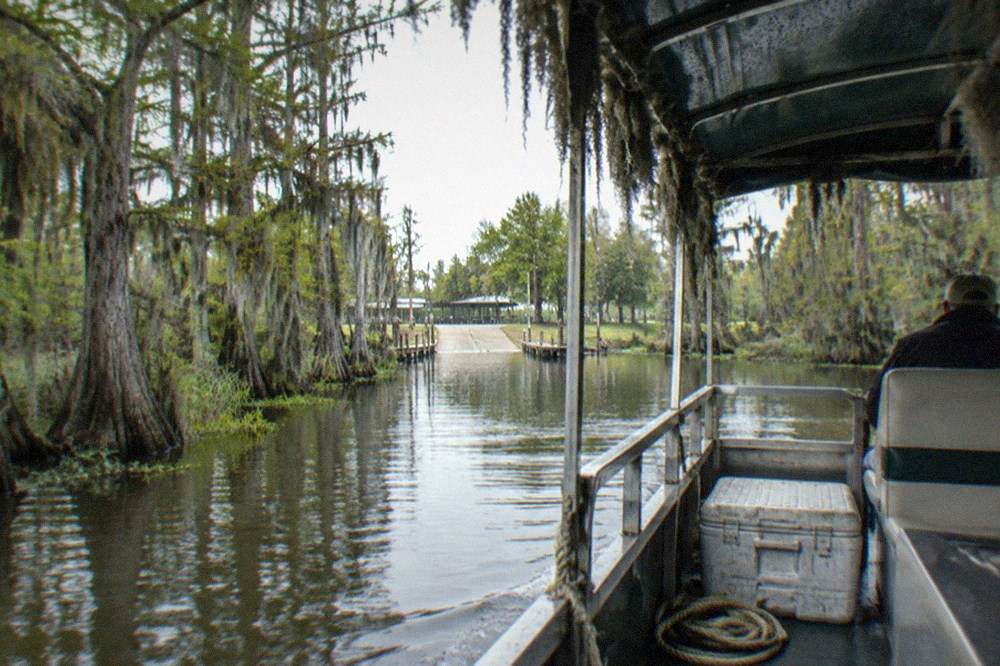
A covered pontoon boat supplies shade, seating, railings and a roof against rain, so your clothing can be lighter and your gear bag smaller, while a kayak trip supplies none of those things and demands you dress as if you will get wet, because you probably will. The covered-boat experience is closer to a ferry than an expedition. Cajun Pride's Manchac cruises run in covered boats in all weather, with only lightning canceling a departure, and one boat in its fleet is wheelchair accessible, which tells you how stable and forgiving the platform is. Airboat Adventures describes its pontoon as wheelchair and stroller friendly, with indoor exhibits at the dock. You can wear a nice shirt on a covered boat and go straight to dinner after.
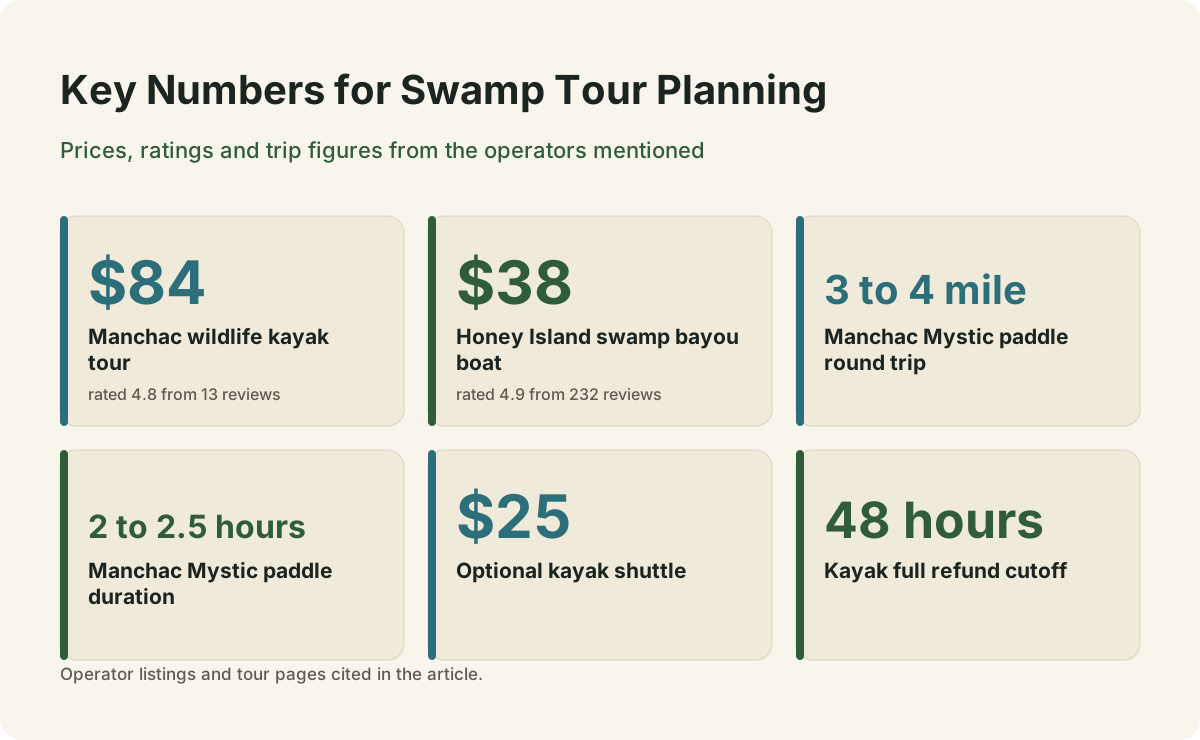
Kayaks are the opposite contract. The Manchac Mystic paddle from New Orleans Kayak Swamp Tours covers a 3 to 4 mile round trip over roughly 2 to 2.5 hours, in tandem and single sit-on-top kayaks, and sit-on-top means your seat is wet before you launch. The operator's own FAQ recommends planning for water and weather, and its cancellation terms, a full refund more than 48 hours out, suggest a trip where conditions genuinely matter. Dress in synthetics that dry fast, skip anything you would be upset to lose to the water, and use a dry bag for keys and phone.
Airboats sit between the two but lean toward the kayak end for gear. They are fast, loud and wet with spray, and Airboat Adventures warns that it is not responsible for cameras or equipment lost to water, splash or rain. Hearing protection is provided, but your own sunglasses retainer strap and a sealed phone case are on you. The company also bars pregnant women, children under 5 and anyone with neck or back injuries from airboats entirely, which is worth knowing before you dress the whole family for one.
| Format | What the operator provides | What you must bring yourself | Footwear standard |
|---|---|---|---|
| Covered pontoon | Roof, shade, seating, restrooms on some boats | Sunscreen, repellent, camera | Closed shoes recommended, not enforced |
| Airboat | Hearing protection, life jacket, canopy on some | Strap for glasses, waterproof phone case, wind layer | Closed flat shoes, must board unassisted |
| Kayak | Boat, paddle, life jacket, guide, optional $25 shuttle | Entire change of clothes, dry bag, water shoes | Closed water shoes effectively required |
What Belongs in Your Camera, Sun and Bug Kit?
Three small kits cover nearly every swamp tour problem: a sun kit of sunscreen, hat and polarized sunglasses, a bug kit built around an EPA-registered repellent applied before boarding, and a camera kit whose real star is a strap, a sealable case and a dry bag on anything that floats. Sun first, because it is the one people underestimate. Reflected light off the water doubles your exposure, and two hours on an uncovered boat in summer will mark a cotton-clad shoulder in a way the walk to the dock did not hint at. Polarized lenses do double duty, cutting glare so you can actually see the alligators just under the surface.
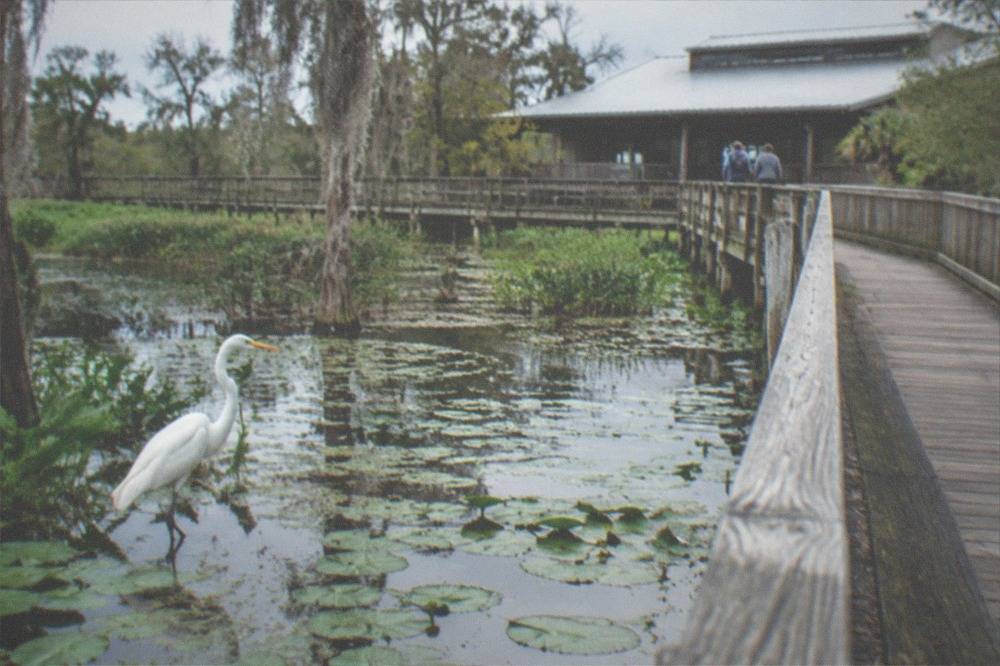
Insects are the second front. Mosquitoes in the marsh are worst at dawn and dusk and in the humid shoulder months, and deer flies can find you mid-lake in summer. Repellent goes on before you board, not after the first bite, and it goes on ankles and the back of the neck, the two spots mosquitoes find first on a seated passenger. Long sleeves in a light fabric are honestly as effective as a second repellent coat, which is why the spring and fall recommendation is clothing over skin whenever you can manage it.
The camera kit is less about the camera than about its survival. A neck strap keeps a phone or binoculars off the floor and out of the water, a ziplock or sealable case handles spray, and a dry bag is non-negotiable on a kayak, where a capsize drill or a wet seat is a normal part of the day, not an accident. Bring more water than you think you need, especially in summer, since most covered cruises run about 90 minutes to 2 hours but the dock time on either end adds up. For how the ticket prices of these formats compare, the swamp tour prices guide lays out the full roster with figures.
| Kit | Core items | Why it matters on the water |
|---|---|---|
| Sun | SPF 30+ sunscreen, brimmed hat, polarized sunglasses | Reflected glare off the water doubles exposure on uncovered boats |
| Bug | EPA-registered repellent, light long sleeves, spare wipe | Mosquitoes peak at dawn and dusk; ankles and neck get hit first |
| Camera | Neck strap, sealable case, dry bag, extra battery | Spray and wet seats kill more phones than drops do |
| Comfort | Water bottle, dry socks in a zip bag, light rain shell | Tours run rain or shine, and floors take on water |
The kayak end of the roster is where the kit matters most, and the small-group Manchac wildlife kayak, $84 and rated 4.8 from 13 reviews, is the trip that rewards a packed dry bag. If the paddle-in format is the one you are dressing for, the Manchac wildlife kayak tour page has the full details.
What Is the One Packing Mistake for Each Tour Format?
Every swamp tour format has one signature packing mistake: cotton on covered boats, loose items on airboats, and dressing to stay dry on kayaks, and each mistake is completely avoidable if you know which boat you are boarding before you pack the bag. On the covered pontoon cruises, the mistake is cotton and dark colors. The roof protects you from rain but not from ambient humidity, and a soaked cotton shirt stays soaked for the drive back. Cajun Pride's own FAQ notes that small personal coolers are fine but outside beer and alcohol are not allowed on the boats, so the drinks question is answered for you before you overpack.
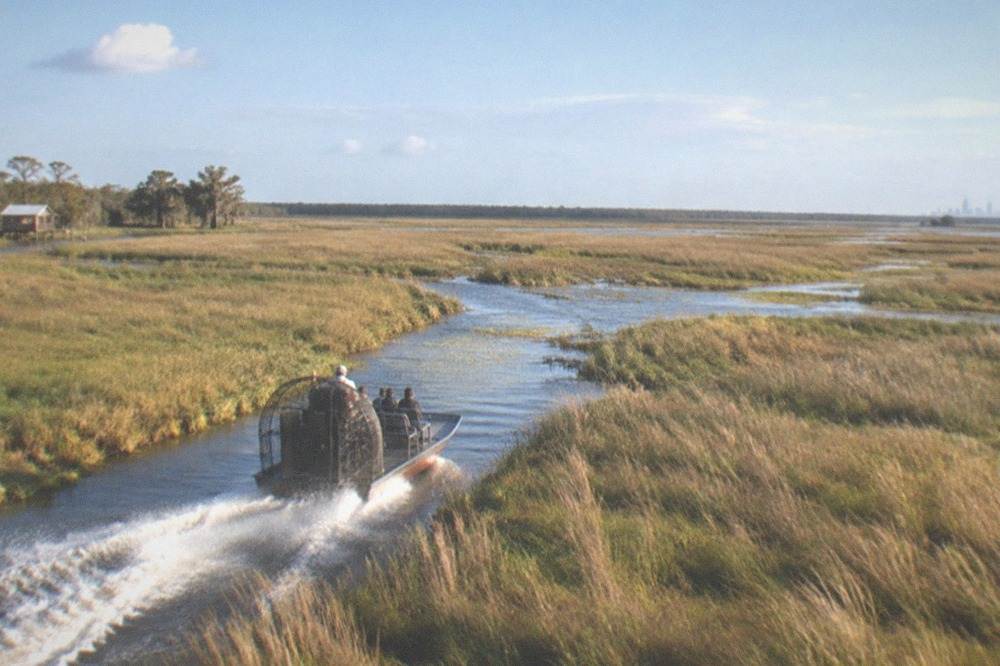
On airboats, the mistake is bringing things that are not attached to you. Hats without a chin strap, loose sunglasses and unstrapped phones are the standard casualties, and the operator's warning about equipment lost to splash is not fine print, it is the whole point. A bandana or the provided hearing protection handles the noise, and a windbreaker handles the wind chill of a fast boat, which surprises people even in summer. If you are curious whether the speed is safe as well as loud, the piece on whether airboats can tip over covers the physics.
On kayak trips, the mistake is planning to stay dry. The sit-on-top boats are wet by design, the launch is mud, and the Honey Island kayak run is explicitly seasonal because it depends on water level. Dress in swim-adjacent synthetics, keep a towel and a full change of clothes in the car rather than on the boat, and put everything you need on the water inside a dry bag. The one mistake shared across all formats is forgetting the repellent, because the covered boat that shields you from rain does nothing at all about what flies in.
| Format | The signature mistake | The fix |
|---|---|---|
| Covered pontoon | Cotton shirts and dark colors that hold humidity | Light-colored quick-dry fabric, hat for the open stretches |
| Airboat | Unstrapped hats, glasses and phones in the spray zone | Chin straps, retainer straps, sealed case, windbreaker |
| Kayak | Dressing to stay dry on a wet sit-on-top boat | Synthetics, water shoes, dry bag, change of clothes in the car |
| All formats | Leaving the repellent in the car | Apply before boarding, reapply after the halfway mark |
For a self-drive option on the water with the simplest packing list of all, the Honey Island swamp bayou boat, $38 and rated 4.9 from 232 reviews, keeps the gear demands low while still running through one of Louisiana's least-altered river swamps. The Honey Island swamp bayou boat tour page has the full rundown.
How Do You Dress for Rain, Cold Snaps and Winter Tours?
Dress for winter swamp tours in windproof layers with a warm hat and waterproof shoes, treat any rain forecast as a gear problem rather than a cancellation problem, and remember that covered boats keep running in rain while uncovered and kayak formats shift what you need to carry. The covered-boat fleet is the insurance policy here. Cajun Pride runs rain or shine with only lightning canceling, and Cajun Encounters holds the same line on its policy page. A cheap packable rain shell fits in any bag, does double duty as a wind layer on fast airboats, and weighs nothing on the pontoon where you may never unzip it.
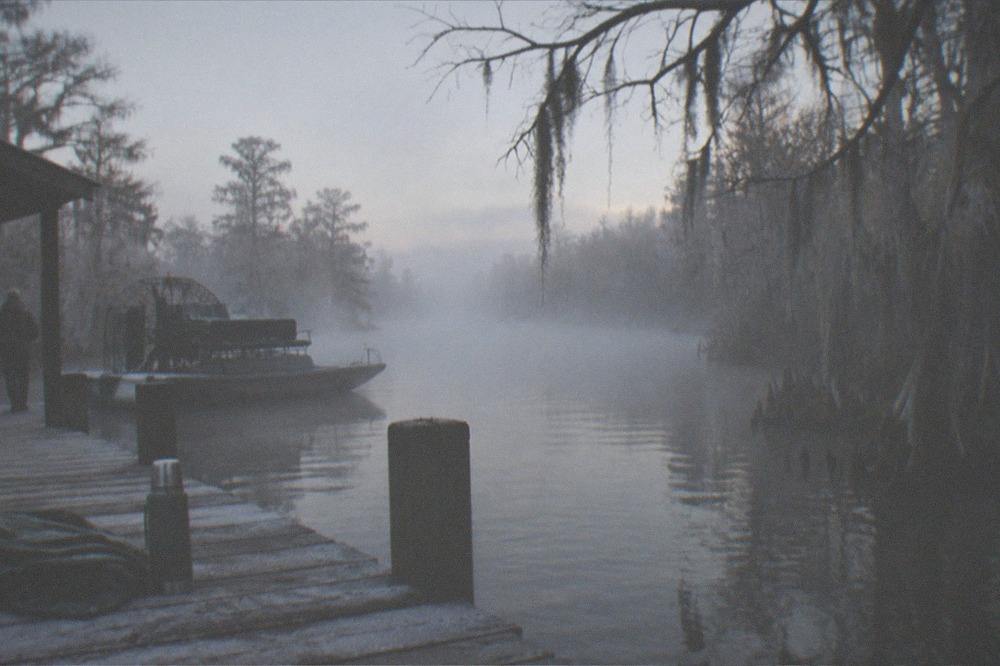
Cold snaps deserve more respect than they get, because winter tours still sell, still run, and still put you on open water with wind. The winter schedule is thinner, with Cajun Pride running three departure times from November through March and its fourth seasonal departure reserved for the warmer months, but the boats are not empty. A warm base layer under a shell, closed waterproof shoes and a knit cap cover the whole season. Gloves matter more on the kayak and airboat formats, where your hands are out in the wind the entire time.
The kayak season is the one genuinely governed by conditions. The Honey Island kayak tour runs only when water levels allow, and the Maurepas Swamp WMA is subject to the state's water-level management, with the Louisiana Department of Wildlife and Fisheries listing the permitted commercial kayak operators on the Maurepas Swamp WMA page. If a cold or wet week has your paddle in doubt, the covered-boat fallback is the reason to keep one in your back pocket: check the Cajun Encounters pickup locations page for the downtown pickup nearest your hotel, since transport turns a weather-complicated day into a simple one.
That covered-boat fallback is exactly why the Manchac covered swamp cruise earns its place in this guide's related slot: from $35, rated 4.7 from 1,759 reviews, with optional hotel pickup and a roof over every seat. Check availability on the Manchac covered swamp cruise page once your outfit is settled.
Packing for a swamp tour comes down to matching the bag to the boat. The covered cruises forgive almost everything short of cotton in July, the airboats demand that everything be strapped down, and the kayaks assume you will finish the day damp and happy. Pick the format first, the month second, and the outfit follows on its own.
Common Questions About What to Wear on a Swamp Tour
What should you wear on a swamp tour in each season?
Wear loose, light-colored quick-dry clothing in summer with a brimmed hat and strong sunscreen, long sleeves and repellent in spring and fall, and warm layers under a windproof shell in winter. Rain is possible in every season, and tours run rain or shine, so a packable shell belongs in the bag year-round.
Do you need closed shoes on a swamp tour?
Yes, effectively. Boarding ramps and dock surfaces are slick, pontoon decks take on water, and kayak launches are roadside mud. Water shoes, old sneakers or light hiking shoes all work; flip-flops and heels do not, and airboat passengers must be able to board unassisted.
What do covered boats provide that kayak trips do not?
Covered pontoons supply shade, a roof against rain, seating and on some boats restrooms, so lighter clothing works. Kayak trips supply none of that: sit-on-top seats are wet from the start, the paddle covers 3 to 4 miles, and you should dress as if you will get wet, with a dry bag for anything you need to keep.
Can you bring alcohol on a swamp tour?
Generally no. Cajun Encounters prohibits alcohol on its non-private tour boats and buses, and Cajun Pride bans outside beer and alcohol on its boats while allowing small personal coolers. Check the operator's policy page before packing a cooler.
Do swamp tours get canceled for rain?
Rarely. Covered-boat operators such as Cajun Pride and Cajun Encounters run rain or shine, with only lightning canceling a departure. Kayak trips are the exception, since the Honey Island paddle depends on water levels and runs seasonally.
What is the one packing mistake for each tour format?
Cotton and dark colors on covered boats, unstrapped hats and phones on airboats, and dressing to stay dry on kayaks. Across all formats, the shared mistake is leaving the insect repellent in the car instead of applying it before you board.