the honey island swamp monster
The Honey Island Swamp Monster legend, told as folklore: the Harlan Ford origin story, the rougarou connection, why the tale stuck, and the real wildlife of the 70,000-acre swamp you can tour by boat.
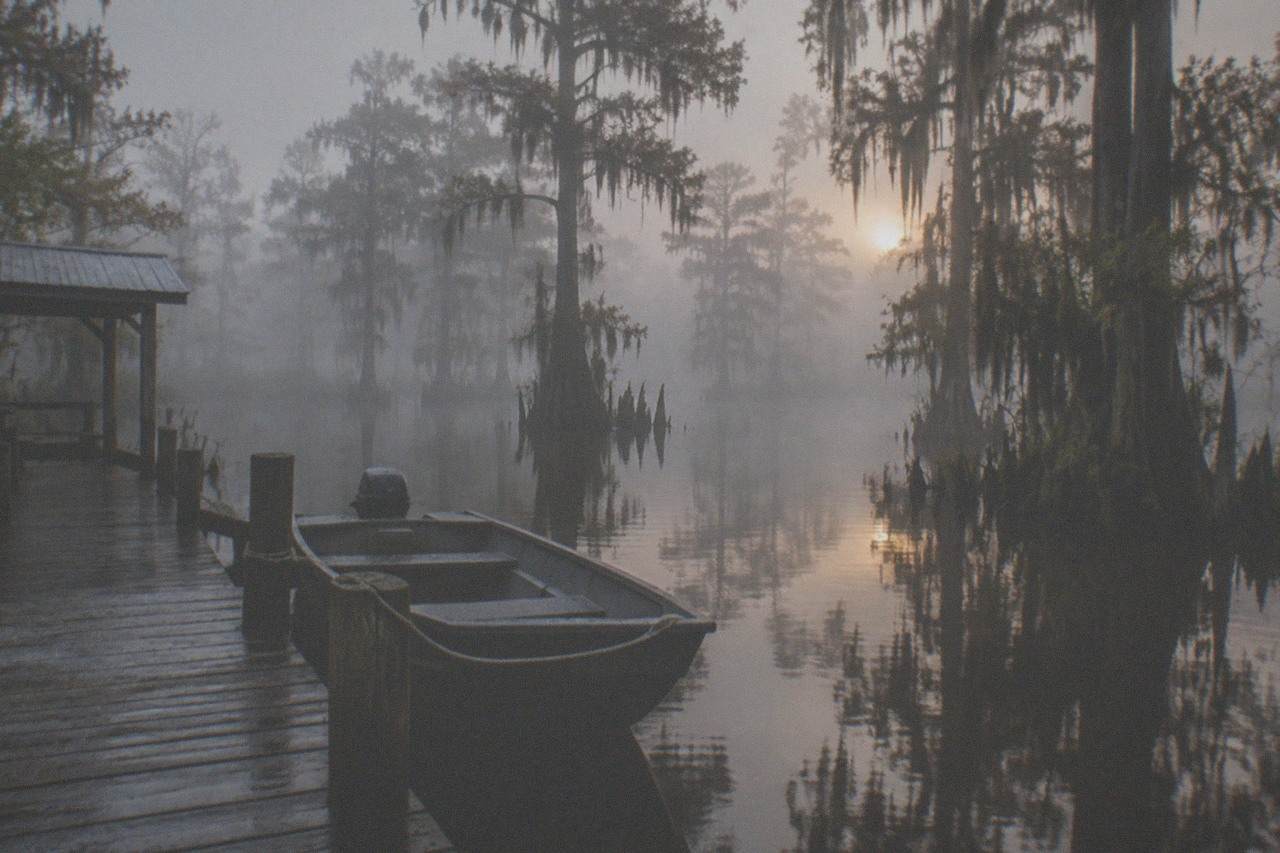
the honey island swamp monster
The Honey Island Swamp Monster is a Louisiana cryptid legend, not a documented species: a tall, bipedal, ape-like creature first reported by a hunter named Harlan Ford, who said he saw it in the Honey Island Swamp in 1963. The story is folklore, retold for six decades, and no physical evidence has ever confirmed it. The swamp itself is real, protected, and open to boat tours year round.
The legend and the place are tangled together, and that is exactly why the story survives. The Honey Island Swamp is a roughly 70,000-acre wetland east of New Orleans, one of Louisiana's last untouched river swamps, about 45 minutes from the city by road. It sits in the Pearl River basin, and about half of its acreage is protected. There are no pipelines and no oil platforms in it, which is rare for coastal Louisiana and gives the swamp a genuinely primeval feel: flooded bald cypress and tupelo trees, black-water bayous, and enough animal life that a strange shape at dusk never lacks a plausible backdrop.
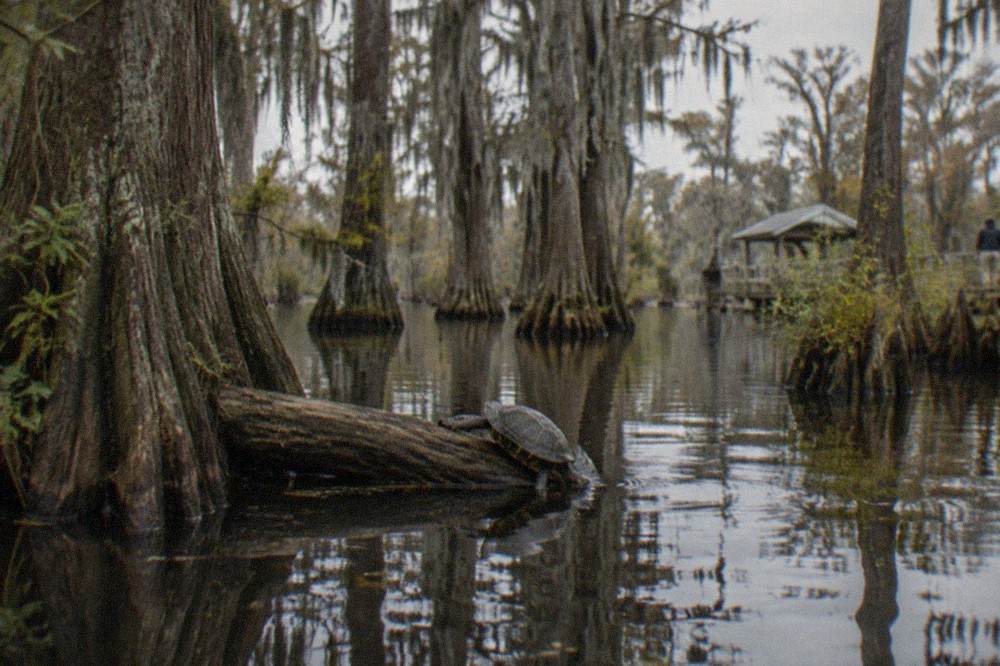
That backdrop is the honest way to read the monster. This article treats the creature as folklore throughout, because that is what the evidence supports: a story people tell, on a swamp people visit. The daytime version of these waters is easy to book, and the guides who work here daily have heard every version of the tale. If the legend is what draws you, a boat is the only realistic way into the swamp, and the three tours below are the standard options.
Who Was Harlan Ford, and What Did He Report?
Harlan Ford is the name attached to the first widely circulated Honey Island Swamp Monster report: a hunter and retired air traffic controller who said he encountered a large, bipedal, ape-like creature in the swamp in 1963, and who spent years afterward searching for it with casts and photographs he claimed as evidence. The report is the origin point of the legend, and it has never been verified by any scientific or official body.
As the story is reported, Ford was hunting in the swamp when he came across strange tracks and then, on a later trip, the creature itself. He described something tall and hairy that walked upright and fled through terrain a human would struggle to cross. He returned with plaster casts of footprints, and the tale grew from there, passed through local telling, documentaries, and eventually podcasts. The Skeptoid podcast covered the legend in September 2026, treating it as folklore while cataloguing the real megafauna that share the swamp, which is roughly the split any honest account lands on.
Two things keep the Ford story alive in a way most cryptid reports are not. First, the setting does half the work: a swamp this large, this unroaded, and this dark at night can absorb any number of hypothetical creatures without ever having to produce one. Second, the story has a named witness with a specific year, which gives it a shape people can repeat. "A hunter saw something in 1963" is a sentence; "there is a swamp monster" is only a vibe.
It is worth separating the layers. The claim that the Honey Island Swamp was never logged is repeated in many retellings, and it should not be stated as fact; the swamp's genuinely remarkable features, its size, its protected acreage, its absence of oil infrastructure, are documented, and they are impressive without embellishment. The creature itself sits in the same category as the rougarou and Bigfoot: a story with a long local shelf life and a short evidentiary one.
Is the Honey Island Swamp Monster the Same Thing as the Rougarou?
No. The Honey Island Swamp Monster and the rougarou are separate figures in Louisiana folklore: the swamp monster is a regional cryptid tied to one specific wetland and a 1963 report, while the rougarou is a Cajun werewolf-like legend, a shape-shifting creature rooted in French Louisiana tradition that predates the Honey Island story by generations. They get mentioned together because both are bayou monsters, but they come from different storytelling traditions.
The rougarou comes out of Cajun French culture, related to the loups-garous of French folk belief, and it usually involves a person cursed or transformed, often with rules attached: keep the secret, endure the curse, obey a set period of transformation. It is a moral tale as much as a monster tale. The Honey Island Swamp Monster, by contrast, is a cryptid in the modern American mold: an unknown animal, not a cursed human, reported by a witness and hunted for evidence.
The vocabulary question matters because it tells you what kind of story you are hearing. When a Louisiana guide mentions a monster, the word might carry a hundred years of Cajun folklore or sixty years of one specific sighting narrative, and the two sound identical in a boat at dusk. For a fuller picture of the landscape both traditions come from, our piece on the difference between a swamp and a bayou explains the waterways themselves, since the Honey Island Swamp is really a river swamp in the Pearl River basin rather than a single bayou.
If the legend is your reason for going, the standard self-drive option puts you on the water closest to the story's home territory.
Why Did the Legend Stick to This Swamp?
The legend stuck to the Honey Island Swamp because the swamp is unusually easy to believe in: roughly 70,000 acres of one of the least-altered river swamps in the United States, with no pipelines or oil platforms, about half its acreage protected, and a genuine population of large animals including black bears, wild hogs, and alligators. A place that remote and that wild makes a monster feel possible, and every retelling reinforces the fit.
Compare the candidate swamps and the logic gets clearer:
| Factor | Honey Island Swamp | Typical working Louisiana wetland |
|---|---|---|
| Size | ~70,000 acres | Varies, often fragmented |
| Oil and gas infrastructure | None reported: no pipelines, no platforms | Common across coastal Louisiana |
| Protected acreage | About half of the swamp | Varies by parish and ownership |
| Signature rare species | Ringed map turtle, endemic to the Pearl River basin | Varies |
| Large mammals present | Black bears, wild hogs, deer, otter | Varies, often reduced by habitat loss |
The absence of industry is the detail that does the most work. Most of coastal Louisiana is threaded with canals, well sites, and pipeline rights of way; the Honey Island Swamp reads as an exception, and exceptions attract stories. The swamp is also home to the ringed map turtle, a species found in this basin and not widely elsewhere, which is a real claim to uniqueness the monster legend borrows freely.
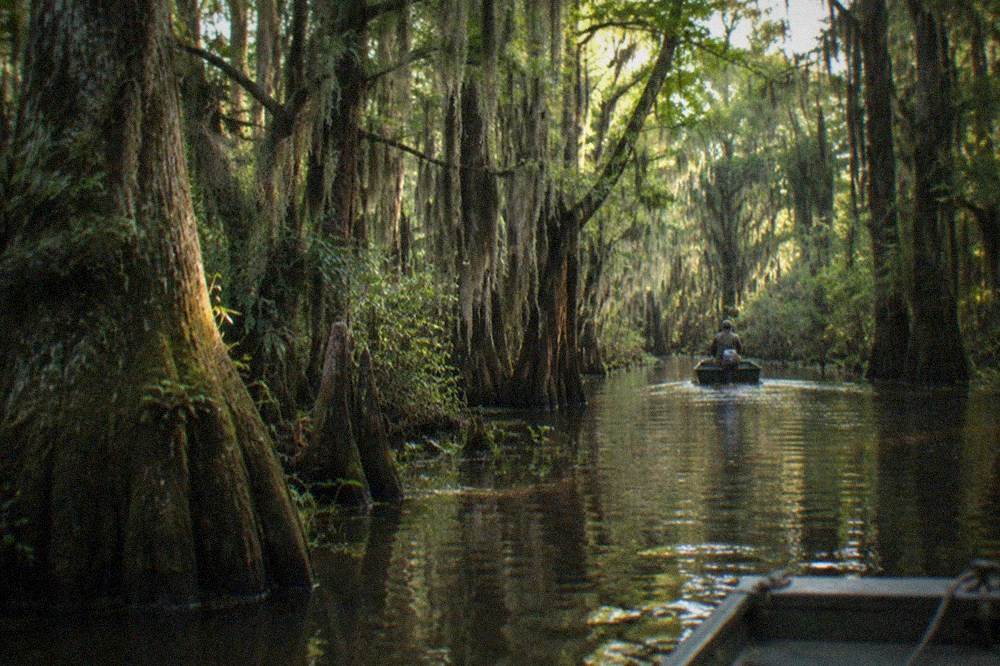
Isolation does the rest. The adjacent Pearl River Wildlife Management Area covers roughly 35,619 acres, and access to the whole area runs through a handful of roads and launches. When the Pearl River gauge at the town of Pearl River hits 16.5 feet, Old Highway 11 closes, and in late May and June 2026 flooding shut the wildlife management area and its shooting range when water ran over the access roads. A wetland that periodically closes itself off from visitors is a wetland where anything might plausibly be hiding.
What Wildlife Actually Lives in the Honey Island Swamp?
The swamp's real animal list is long enough to explain most sightings without a monster: alligators, black bears, wild hogs, white-tailed deer, nutria, otter, beaver, mink, raccoon, bald eagles, herons, egrets, ibis, owls, osprey, and the endemic ringed map turtle all live in or around the Honey Island Swamp. Dr. Wagner's, an operator working these waters since 1982, publishes exactly this list for its tours.
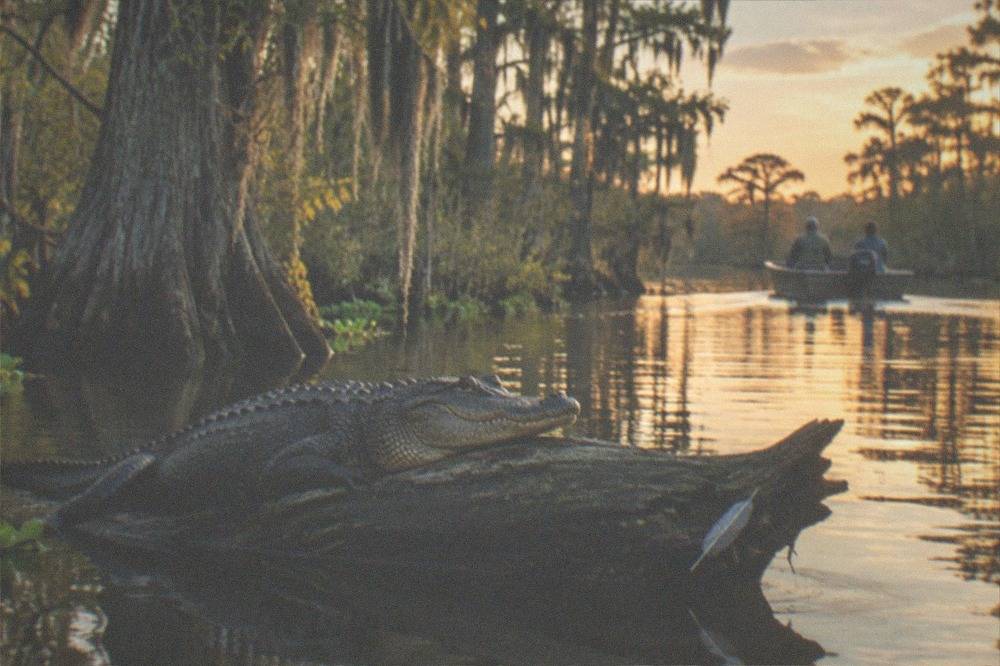
The large mammals are the important part for monster lore. A black bear standing on its hind legs in low light is a tall, dark, upright shape; a wild hog crashing through palmetto sounds bigger than it is; a swimming deer with its head low reads as something else entirely. Louisiana's alligator population now exceeds 3 million animals in the wild, so the baseline wildlife density here is high by any standard. None of this proves anything about a specific sighting in 1963, but it explains why the swamp keeps generating strange reports: it is full of large animals that look strange in bad light.
The bird life deserves its own mention. Bald eagles nest in the basin, and herons, egrets, and ibis work the shallows in numbers that surprise first-time visitors. Guides on the Honey Island tours also point out the prohibition-era "Whiskey Tree," a remnant of the swamp's use as a hiding place during Prohibition, which adds a human history layer to the same waters the monster legend occupies. For a broader look at the region's reptile celebrities, see alligators versus crocodiles in Louisiana.
The honest summary is that the swamp does not need a monster to be remarkable. It has an endemic turtle, a breeding eagle population, black bears within an hour of a major city, and a genuine claim to being one of the least-altered river swamps in the country. The legend is the marketing; the wildlife is the product.
Can You Visit the Honey Island Swamp Today?
Yes, and daily. Boat tours run year round from Slidell into the Honey Island Swamp, roughly two hours on the water, with self-drive and transport-included options; Dr. Wagner's, operating since 1982, runs departures at 9:30 AM, 12:15 PM, 2:45 PM, and 5:00 PM from 55345 US-90 in Slidell, the same launch Cajun Encounters uses. Busy days draw more than 1,000 visitors to the swamp's tours.
The two long-standing operators share a departure point, which makes planning simple. Dr. Wagner's publishes its schedule and prices openly: two-hour narrated tours, daily except major holidays, in covered and uncovered boats, with licensed native guides and Coast Guard-inspected vessels, from $39.99 for adults and $28.99 for children under 12, or $69.99 and $48.99 with round-trip transport from New Orleans. Cajun Encounters runs its own roughly two-hour tours from the same address, with a New Orleans office at 941 Decatur Street and pickup points across downtown for transport-included tickets. Its cancellation policy is strict and worth knowing: reservations made within 36 hours of tour time are final, and anything booked earlier needs 36 hours' notice for a full refund.
The self-drive tour is the straightforward way onto the water, listed from $38 with a 4.9 rating from 232 reviews.
For travelers without a car, the transport-included version from the French Quarter costs more, $75.52, but carries the niche's strongest track record: a 4.9 rating across 7,119 reviews, the most-reviewed swamp tour in the New Orleans area. Whether the monster exists is settled folklore; whether you will enjoy the swamp is a much safer bet, and our longer Honey Island Swamp tour guide covers the practical details, seasons, and booking choices in full.
One planning note that genuinely affects this area: water levels. The Honey Island kayak tours in the same basin run seasonally, dependent on water level, and the spring Pearl River crests in 2026, which reached 17.41 feet at the Pearl River town gauge in June, periodically close access roads. Boat tours from the Slidell launch generally run regardless, but checking the operator's live listing before a long drive is cheap insurance.
Is a Honey Island Boat Tour Worth It for Skeptics?
For most visitors, yes: the tour delivers a genuinely wild landscape, reliable alligator and bird sightings on warm days, and a guide-narrated dose of local folklore that includes the monster legend, all in about two hours from a launch 45 minutes from New Orleans. Skeptics who want evidence of a cryptid will leave without it, but skeptics who want one of the most intact swamps in the United States get exactly that.
The value case does not lean on the legend. It leans on the swamp being a rare thing: a large, unprotected-by-fences, genuinely functioning wetland ecosystem that a member of the public can enter with a guide for under $40 self-drive. Sightings of alligators are never guaranteed, and operators say so plainly, but the odds on a warm, sunny day are good, and the flooded cypress forest alone carries the trip. On the question of overall value across the region, our piece on whether Louisiana swamp tours are worth it works through the costs and what you get for them.
The monster adds a layer most swamp destinations cannot offer: a story with a name, a date, and a specific patch of water attached to it. Guides tell it well. Whether you believe the 1963 report or file it with the rougarou, you are hearing a legend in the landscape that produced it, from people who work that landscape daily, which is a better version of the experience than any documentary can manage.
If the legend is the hook that got you this far, the three tours below cover the realistic ways onto the water: the standard self-drive trip, the long-standing Dr. Wagner's option, and the transport-included version from the French Quarter.
Every trip above links to its operator's live listing, and the New Orleans Swamp Tours homepage compares the full roster, airboats, kayaks, and plantation combos included, side by side.
Common Questions About the Honey Island Swamp Monster
the honey island swamp monster
It is a Louisiana cryptid legend: a tall, ape-like, bipedal creature first reported by hunter Harlan Ford, who said he saw it in the Honey Island Swamp in 1963. The story is folklore with no verified physical evidence, retold for over sixty years and attached to one of the least-altered river swamps in the United States.
Who first reported the Honey Island Swamp Monster?
Harlan Ford, a hunter who said he encountered the creature in the swamp in 1963 and later returned with plaster casts of tracks he attributed to it. His report is the origin of the legend as it circulates today, and it has never been verified by any scientific or official body.
Is the Honey Island Swamp Monster the same as the rougarou?
No. The swamp monster is a modern cryptid tied to one wetland and a 1963 report. The rougarou is a much older Cajun folk figure, a shape-shifting, werewolf-like creature rooted in French Louisiana tradition. They share bayou settings but come from different storytelling traditions.
What animals actually live in the Honey Island Swamp?
Alligators, black bears, wild hogs, deer, nutria, otter, beaver, mink, raccoons, bald eagles, herons, egrets, ibis, owls, osprey, and the endemic ringed map turtle. Operators working the swamp since 1982 publish this list, and the large mammals in poor light explain most strange sightings.
Can you take a boat tour of the Honey Island Swamp?
Yes, daily and year round. Roughly two-hour narrated tours leave from 55345 US-90 in Slidell, about 45 minutes from New Orleans, with self-drive options from $38 and transport-included options from $75.52. Busy days draw more than 1,000 visitors to the swamp's tours.
Was the Honey Island Swamp really never logged?
That claim appears in many retellings of the legend, but it should not be repeated as fact. What is documented is impressive enough: roughly 70,000 acres of one of the least-altered river swamps in the country, no pipelines or oil platforms, and about half the acreage under protection.